Using photos to identify & position shipwrecks

Mapping the location of shipwrecks during the Second World War can be challenging when even original data sources must be considered with some doubt. Marking the exact location of where a ship is sunk is not usually the first thing on the participants’minds during the heat of battle. This is even more so the case during moments of intense activity when numerous ships are hit.

One such example are the ships that were sunk during the various Allied air raids on Naples. The city experienced a number of air attacks between June 1940 and September 1943 when Italy surrendered The most serious and numerous of these attacks happened in the summer of 1943 so that when the city fell to the Allies in September, the harbour was littered with sunken vesels.

None of these sunken ships has been listed with an exact location but rather simply as “Naples Harbour.” A few photos exist, however, of the harbour, showing some of the wreckage. Though not all these ships are named, some are and, with careful analysis of landmarks in the photos, it is possible to get a better defined positioning of these vessels than was previously possible.

Source: Naval History and Heritage Command

This photo posted on Reddit shows some of those vessels. Pictured from left to right (according to the caption) are the vessels Villarosa (sunk September 4, 1943), Catania (August 4, 1943) and Sicilia (April 4, 1943). Mount Vesuvius appears in the background meaning that the view is looking east. Comparing the above photo to some other available aerial photos such as the one below , one can better identify the positioning of these 3 ships within the harbour.
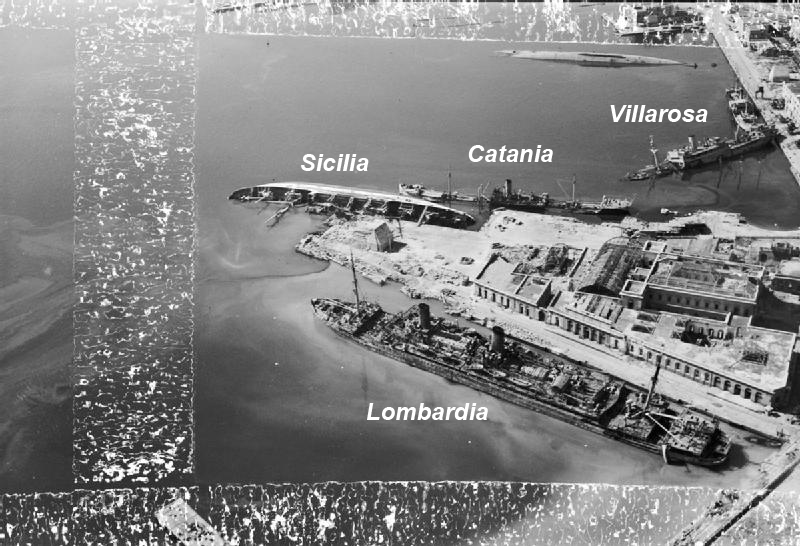
Credit: Imperial War Museum (as posted in Wikipedia)

Numerous other photos exist of sunken ships in Naples Harbour but few of these ships are identified by name. Even in the photo above one can see a fourth sunken ship, overturned and unidentified. With these two photos one is able to get an apporixmate locations of their sinkings.

Credit: Maxar, Esri

A number of other ships that were sunk in the harbour do not yet appear on the map. To view these ships and others in the global context, visit Sunken Ships of the Second World War.

Australian Cargo Ship Macdhui

The wreck of the Macdhui (Source: Esri, Maxar)

One of the few wrecks that is still visible from the air, the Australian passenger / cargo ship Macdhui was sunk on June 18, 1942 after being bombed by Japanese aircraft near Port Morseby, New Guinea.

Tonnage: 4,561

Casualties: 10

Location: 9 26 56S 147 8 13E

For further reference: Wikipedia, Pacific Wrecks, Michael McFadyen’s Scuba Diving Web Site, PNG Attitude, WreckSite

See it in on the map.

Russian destroyer Svobodny

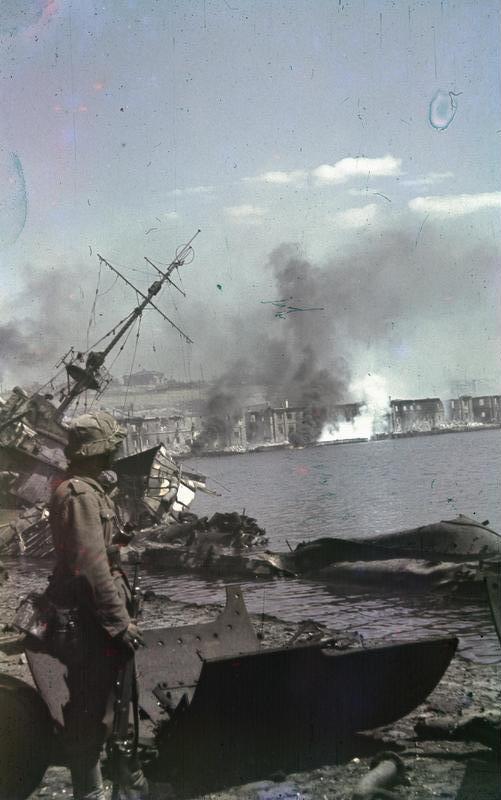
Russian destroyer Svobodny, sunk on June 10, 1942 while unloading ammunition for the besieged Russian garrison at Sevastopol. Location of the sinking was in Korabelnaya (корабельная) Bay in Sevastopol. The Wikipedia image of the ship to the left indicates it was moored along a quay when it was sunk.

Tonnage: 1,727

Casualties: 67

Location placed at 44 36 55N, 33 32 5E (a best guess)

For further reference: Wikipedia, uboat.net

See it in on the map.

Project Scope

What is this all about?

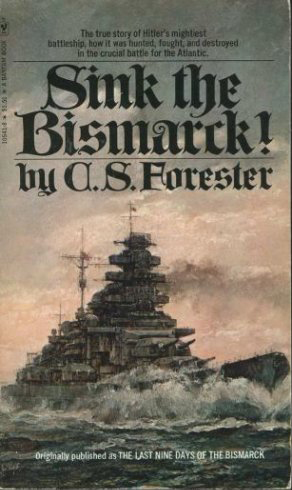
One of the books that made an impression on me as I was growing up in the 1970s was C. S. Forester’s Sink the Bismarck! Although it wasn’t the most factual account of the destruction of the the great German battleship, it did spark a life-long interest in me in Second World War naval warfare.

My other great interest while I was growing up was maps. That interest I eventually turned into a satisfying career.

Ten years ago I was surfing around the Internet and came across uboat.net, a detailed and thorough site that lists all of the ships sunk by German u-boats and their locations as well as the u-boats themselves. The site is great but the focus I found to be too limiting. U-boats played a major role in the Battle of the Atlantic but did not account for all the shipping losses in that theatre. Where were the ships sunk by mines or bombs or shells? Or, for that matter, what about the rest of the war, especially the naval war in the Pacific?

I looked about the Internet and quickly realized that no such database and/or map existed. There was a rather unsatisfactory map of World War II shipwrecks produced by SeaAustralia but it was grainy and static. Clearly, if I wanted to see such a map, I would have to create it.

And so I embarked on a project of mapping all of the ships sunk during the Second World War as a result of military action (i.e. no accidental sinkings). After 8 years of research I came up with a database and an interactive map that contained over 13,000 records. Since I published this mapping application in 2020 I have continued to research the Internet and hard copy sources for the locations of the 5,000 records for which I did not have location. This has continued to yield results and I have been able to add another 800 or so locations to the map.

Take some time with the mapping application and look up your favourite ship or location. There are bound to be mistakes so let me know if you find any.

Return to this site to learn of updates and other Second World War naval warfare maps.

Launch the mapping application to see the results.

Follow us on Instagram.