Submarine Activity during World War II

Submarines were the single greatest cause of vessel sinkings during the Second World War – about 34% of the total 20,000 ships that were sunk. The Germans in their U-boats accounted for 2,955 of these vessels and collectively they totaled over 14 million tons of shipping. Less well known is the US submarine war against the Japanese. American submarines accounted for 1,994 vessels with a tonnage of 5.6 million. Further down the list was the UK who accounted for 1,625 vessel sinkings of 1.5 million tons. The Japanese, surprisingly, accounted for only 187 vessel sinkings of less than a million tons.

It is worth noting a couple of things about these numbers:

  1. Not all ships listed in the database have a tonnage value. Records for the western Allies tend to be better and more complete and these were often the victims of German submarine attacks. Japanese records – the target of US and UK submarines in many cases – are less complete.
  2. Many of the vessels sunk by US submarines were small vessels (less than 20 tons) including fishing vessels and small junks in use by the local population (See the records for USS Blenny, for instance).

An Easier One to Map

Photo courtesy of Photoship / Tyne Built Ships

Président Dal Piaz was a 4,866 tonne Tyne built passenger / cargo ship, built and launched in 1929 for the Cie Générale Transatlantique in Marseilles, France. In 1940, after the Italian invasion of the south of France, it was taken over by the government of Italy. In 1943, it was seized by the Germans after the Italian armistice and returned to the French in February 1944. In June of that year it was again seized by the French and was intended to be used as a blockship, blocking the harbour at Cassis, France when it was torpedoed and sunk by the British submarine Universal, pretty much in the spot where the Germans had intended to scuttle her. The air photo below makes it easy to map the location of her demise.

Photo courtesy of D Falcou / Tyne Built Ships

See the Président Dal Piaz on the map

Sources: Tyne Built Ships, Ships Nostalgia

Project Scope

What is this all about?

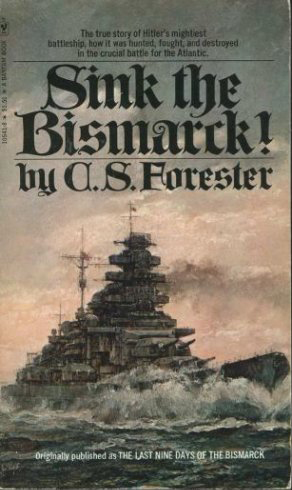
One of the books that made an impression on me as I was growing up in the 1970s was C. S. Forester’s Sink the Bismarck! Although it wasn’t the most factual account of the destruction of the the great German battleship, it did spark a life-long interest in me in Second World War naval warfare.

My other great interest while I was growing up was maps. That interest I eventually turned into a satisfying career.

Ten years ago I was surfing around the Internet and came across uboat.net, a detailed and thorough site that lists all of the ships sunk by German u-boats and their locations as well as the u-boats themselves. The site is great but the focus I found to be too limiting. U-boats played a major role in the Battle of the Atlantic but did not account for all the shipping losses in that theatre. Where were the ships sunk by mines or bombs or shells? Or, for that matter, what about the rest of the war, especially the naval war in the Pacific?

I looked about the Internet and quickly realized that no such database and/or map existed. There was a rather unsatisfactory map of World War II shipwrecks produced by SeaAustralia but it was grainy and static. Clearly, if I wanted to see such a map, I would have to create it.

And so I embarked on a project of mapping all of the ships sunk during the Second World War as a result of military action (i.e. no accidental sinkings). After 8 years of research I came up with a database and an interactive map that contained over 13,000 records. Since I published this mapping application in 2020 I have continued to research the Internet and hard copy sources for the locations of the 5,000 records for which I did not have location. This has continued to yield results and I have been able to add another 800 or so locations to the map.

Take some time with the mapping application and look up your favourite ship or location. There are bound to be mistakes so let me know if you find any.

Return to this site to learn of updates and other Second World War naval warfare maps.

Launch the mapping application to see the results.

Follow us on Instagram.